 Dibz
Basement apartments for rent in the GTA (2026): prices and what to check
What basement apartments rent for in Toronto, Brampton, Mississauga and 14 more GTA cities in 2026, how they compare with condos, and how to check that a unit is legal and safe.
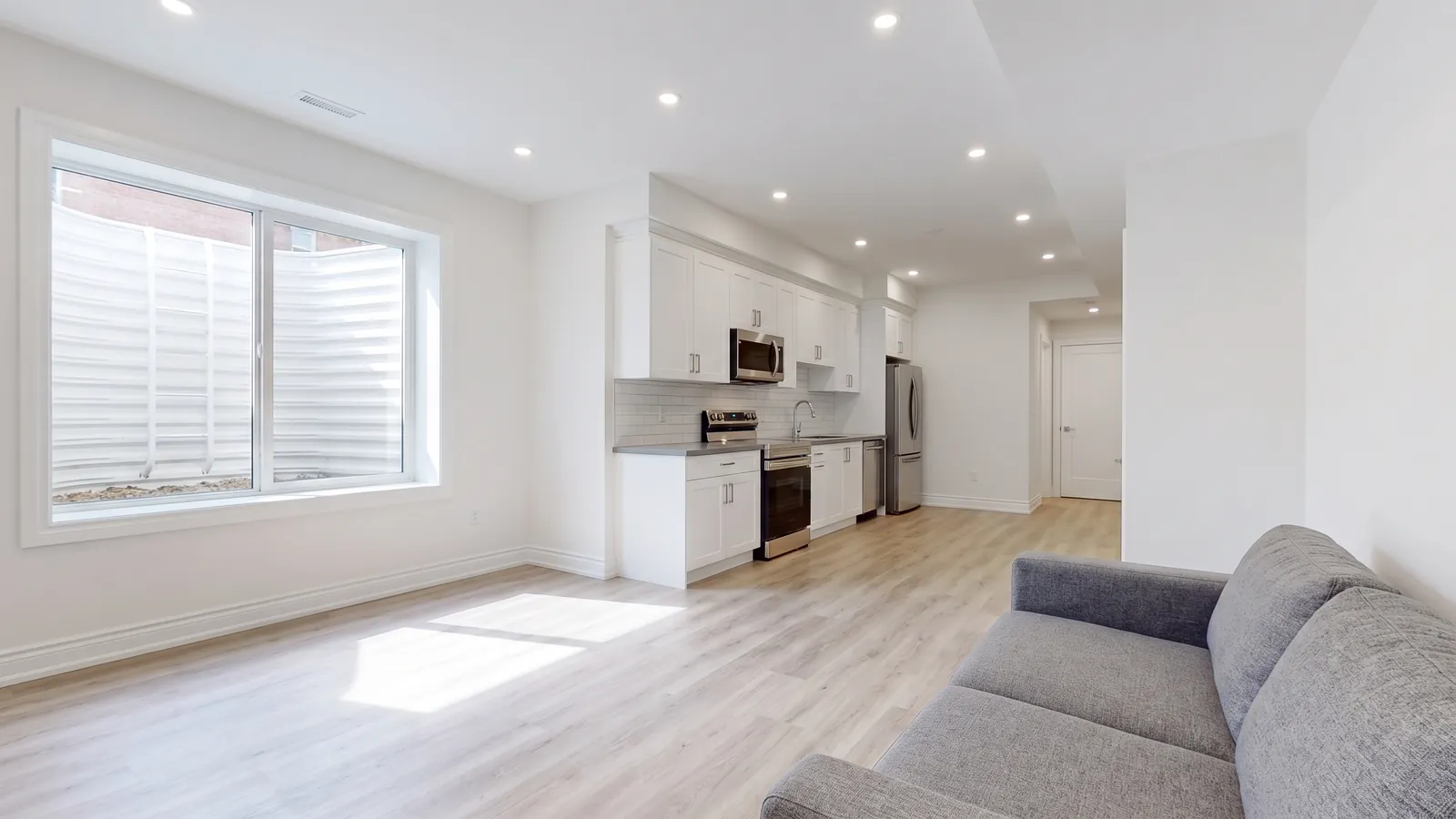
A basement apartment is the most affordable way to rent a self-contained home in the Greater Toronto Area. On October 18, 2026, 2,840 basement apartments were listed for rent across Toronto, York, Peel, Durham and Halton, at a median $1,800 a month, against $2,600 for a condo. A one-bedroom basement unit asks about $1,600, roughly $650 a month less than a one-bedroom condo.
The trade-offs are light, ceiling height, noise from upstairs and, sometimes, whether the unit is legal. Here's what basements cost in each city and what to check before you sign.
Asking rents, not signed leases.
Source: Dibz analysis of active MLS® rental listings (TRREB, via PropTx), Oct 18, 2026
Basement rent by number of bedrooms
Listings: studio 103, one-bedroom 1,005, two-bedroom 1,448, three-bedroom 251, four-bedroom 32.
Source: Dibz analysis of active MLS® rental listings (TRREB, via PropTx), Oct 18, 2026
Show the numbers
| Value | |
|---|---|
| Studio | $1,450/mo |
| 1 bed | $1,600/mo |
| 2 beds | $1,850/mo |
| 3 beds | $2,200/mo |
| 4 beds | $2,525/mo |
Two-bedroom basements are the most common (1,448 listings) and ask a median $1,850, still well below a one-bedroom condo ($2,250). That's why basements are popular with students, newcomers, young couples and anyone who wants more space for less.
Basement rent by city
Basement rents are remarkably even across the region. Most cities sit between $1,700 and $1,850. Oakville is the exception at $2,000.
Toronto has by far the most (1,086), followed by Brampton (308), Mississauga (217), Richmond Hill (195) and Markham (188). Browse live listings: Toronto, Brampton, Mississauga, Richmond Hill, Markham, Vaughan and Oshawa, or every city.
Is the basement apartment legal?
Ontario allows up to three homes on most residential lots served by city water and sewers, for example a house with a basement apartment and a garden suite. A legal unit still has to meet the Ontario Building Code, the Fire Code and local zoning, which cover things like fire separation from the main house, exits, window sizes, ceiling height, and smoke and carbon monoxide alarms.
How to check:
- Brampton and Mississauga require second units to be registered with the city and publish registry lists you can search by address. A unit on the list has been inspected.
- Elsewhere, ask the landlord whether the unit was built with a building permit and passed inspection, and check the city's website for how it handles second units.
- Ask directly. A landlord with a legal unit is usually happy to say so.
What if it isn't registered? Your tenancy is still covered by the Residential Tenancies Act, so your rights on rent, repairs, notice and deposits still apply. The bigger risk is safety, and the chance the city orders the unit closed. Never rent a unit without working smoke and carbon monoxide alarms or a second way out in a fire.
Checklist for viewing a basement apartment
- Light and air: at least one large window you could climb out of in a fire, and decent ventilation. Check for a dehumidifier, musty smells or water stains (signs of leaks or past flooding).
- Ceiling height: walk through with your arms up; look for low ducts and beams.
- Separate entrance: most legal units have their own door. Ask who else uses the laundry, furnace room or yard.
- Noise: ask about the household upstairs. Visit in the evening if you can.
- Utilities: many basement leases charge a percentage of the house's utility bills on top of the rent. Get the share or a fixed amount written into the lease.
- Heat and cooling: basements can be cold in winter. Ask about thermostat control and air conditioning.
- Parking and internet: is a driveway space included? Is Wi-Fi shared with the main unit?
- The lease: Ontario requires a standard lease for most residential tenancies. A landlord can ask only for a last-month's-rent deposit and a refundable key deposit, no damage deposit.
Will the rent go up?
Ontario's rent increase guideline is 1.9% for 2027, but it doesn't apply to most basement apartments first lived in after November 15, 2018. Many basement units in the GTA were finished after that date, so their rent can rise by more than the guideline: still only once every 12 months, with at least 90 days' written notice. Ask when the unit was first rented before you sign.
Basement vs. condo vs. room
| Basement (1 bed) | Condo apartment (1 bed) | Room in a shared home | |
|---|---|---|---|
| Median rent (GTA) | $1,600 | $2,250 | about $1,028 |
| Private kitchen and bath | Usually | Yes | Usually not |
| Utilities included | Often a share | Often water and heat | Usually included |
| Building amenities | No | Often | No |
| Pets | Ask the owner | 7 in 10 allow | Ask |
For more on what each kind of rental costs, see average rent in Toronto and the GTA, and if you have a pet, pet-friendly rentals in Toronto. Thinking about buying a house with a basement unit to help with the mortgage? See how much income you need to buy a house.
FAQ
How much is a basement apartment in Toronto?
A median $1,800 a month across 1,086 basement apartments for rent in Toronto on October 18, 2026. Across the GTA, a one-bedroom basement asks about $1,600 and a two-bedroom about $1,850.
How much is a basement for rent in Brampton?
A median $1,772 a month (308 listings, October 18, 2026). Mississauga's median is $1,850.
How do I know if a basement apartment is legal in Ontario?
In Brampton and Mississauga, search the city's second-unit registry by address. Elsewhere, ask the landlord for proof of a building permit and final inspection, and check that the unit has its own exit, proper fire separation, egress windows and working smoke and carbon monoxide alarms.
Are basement apartments rent-controlled in Ontario?
Only if the unit was first occupied as a home on or before November 15, 2018. Most newer basement apartments are exempt from the yearly guideline (1.9% for 2027), though the landlord can still raise the rent only once a year with 90 days' written notice.
Do I have tenant rights in an illegal basement apartment?
Yes. The Residential Tenancies Act applies to the tenancy whether or not the unit is registered with the city, so the rules on notice, repairs, deposits and rent increases still protect you.
Sources
- Government of Ontario: Residential rent increases
- Government of Ontario: Renting in Ontario, your rights
- City of Mississauga: Registering a second unit
- City of Brampton: Second units
- City of Toronto: Expanding housing options
- Dibz analysis of active MLS® rental listings (TRREB, via PropTx), October 18, 2026: basement apartments for rent in Toronto, York, Peel, Durham and Halton, identified from the listing's own unit details. Every group shown has at least 20 listings.
This article is general information, not legal advice. For a dispute, contact the Landlord and Tenant Board or a community legal clinic.
Dibz is a home search app for the Greater Toronto Area, built on the live TRREB MLS® feed. We write these guides from what we see in the market every day and check every rule and number against official sources, listed at the end of each article. Charts marked "Dibz analysis" are calculated from active MLS® listings on the date shown.
Keep reading
Average rent in Toronto and the GTA (October 2026)
What rentals ask in Toronto and the GTA in October 2026, by unit type, by bedrooms and by city, from basement apartments and rooms to condos and whole houses.
Pet-friendly rentals in Toronto (2026): rules, rents and tips
How many Toronto and GTA condo rentals allow pets in 2026, what pet-friendly units cost, your rights under Ontario law, condo pet rules and how to rent with a dog or cat.
Average home prices in the GTA by city (October 2026)
What homes for sale ask in 22 GTA cities in October 2026, from Toronto and Mississauga to Oshawa and King, by home type, with price per square foot.