 Dibz
DibzFHSA vs. RRSP Home Buyers' Plan (2026): how to use both
FHSA vs. RRSP Home Buyers' Plan in 2026: limits, repayment rules and how to combine them for up to $100,000 per buyer toward your first home in the GTA.
Yes, you can use the First Home Savings Account (FHSA) and the RRSP Home Buyers' Plan (HBP) for the same first home. The FHSA lets you save up to $40,000, deductible going in and tax-free coming out. The HBP lets you borrow up to $60,000 from your RRSPs and repay it over 15 years. That's up to $100,000 per buyer.
If you're saving for your first home in Canada, these two programs can do a lot of the heavy lifting, and a couple who both qualify can double them. Here's how each one works in 2026, how they compare, how far they go against real GTA asking prices, and a sensible order for using them.
Source: CRA: First Home Savings Account and Home Buyers' Plan rules (2026).
What is an FHSA and how does it work?
The FHSA is a registered account built specifically for first-time buyers.
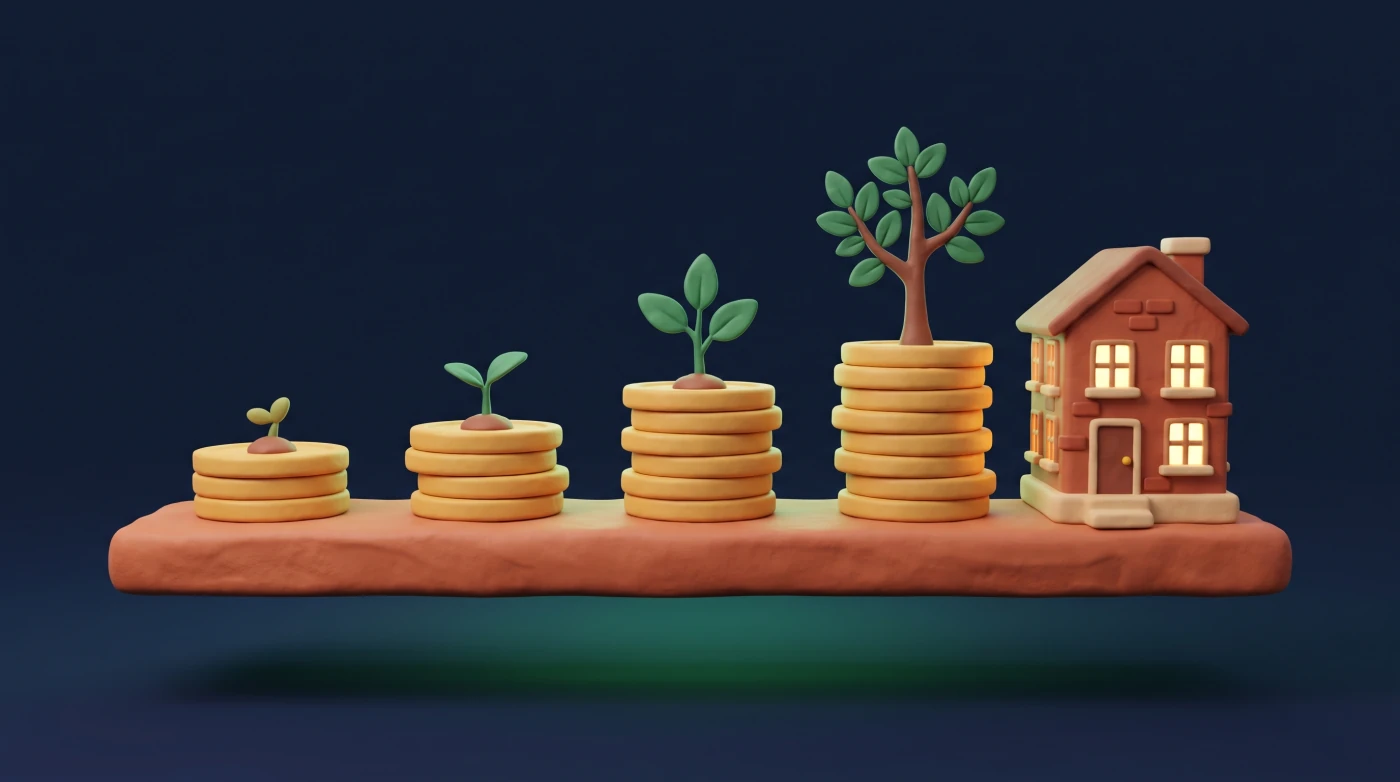
- Annual limit: $8,000 of participation room in the year you open your first FHSA and each year after.
- Lifetime limit: $40,000.
- Carry-forward: unused room carries forward, but only up to $8,000. So the most you can contribute in a single year is $16,000 (plus certain amounts from earlier withdrawals).
- Tax deduction: contributions are generally deductible, like an RRSP.
- Tax-free withdrawal: a qualifying withdrawal to buy your first home isn't taxed. Investment growth inside the account comes out tax-free too.
- Room starts when you open it. Nothing builds up for years before you open your first FHSA, which is why opening one early, even with a small deposit, is a smart move.
Who can open an FHSA?
You must be a resident of Canada, at least 18 (or the age of majority in your province) and no older than 71 at the end of the year, and a first-time home buyer. For the FHSA, that means you didn't live in a home that you, or your current spouse or common-law partner, owned as a principal residence at any time in the current year or the previous four calendar years.
How long can an FHSA stay open?
Your FHSA has a maximum participation period. It ends on December 31 of the year in which the earliest of these happens:
- The 15th anniversary of opening your first FHSA.
- You turn 71.
- The year after your first qualifying withdrawal.
If you don't buy a home, you can transfer the money to your RRSP or RRIF without using RRSP room and without immediate tax. That makes the FHSA a low-risk choice even if you're not sure you'll buy.
FHSA qualifying withdrawal rules
To take money out tax-free, you generally need:
- A written agreement to buy or build a qualifying home, with the purchase or completion before October 1 of the year after the withdrawal.
- To intend to live in the home as your principal residence within one year of buying or building it.
- To still be a first-time home buyer at the time of withdrawal, and to be a resident of Canada.
- Not to have bought the home more than 30 days before the withdrawal.
How does the RRSP Home Buyers' Plan work?
The HBP isn't a separate account. It lets you withdraw money from your existing RRSPs to buy or build a qualifying home, without paying tax on the withdrawal, as long as you repay it.
- Withdrawal limit: up to $60,000 per person. A couple who both qualify can withdraw up to $120,000.
- Repayment: you repay over 15 years. Any required yearly repayment you miss is added to your taxable income for that year.
- Temporary repayment relief: for people making a first HBP withdrawal from January 1, 2022 to December 31, 2028, repayments are deferred to start in the fifth year after the withdrawal. For example, a first withdrawal in 2026 means your first repayment year is 2031.
- First-time buyer test: like the FHSA, you generally can't have lived in a home you owned (or jointly owned) as your principal residence in the current year or the previous four calendar years.
- Written agreement: you need a signed agreement to buy or build the home before you withdraw. A mortgage pre-approval doesn't count.
- Deadline: you must buy or build the home before October 1 of the year after your first withdrawal.
- The 90-day rule: RRSP contributions made within 89 days before your HBP withdrawal may not be deductible. Plan contributions well ahead.
Here's what that repayment relief looks like in practice. Take the full $60,000 in 2026 and nothing is due for four years. From 2031 the minimum is $4,000 a year (1/15 of the balance) until it's paid off in 2045.
Assumes a first HBP withdrawal of $60,000 in 2026 and only the minimum repayment each year. You can repay faster. Any missed minimum is added to your taxable income for that year.
Source: CRA: The Home Buyers' Plan (temporary repayment relief for first withdrawals 2026–2028). Dibz calculation.
Show the numbers
| Balance still owed | |
|---|---|
| 2026 | $60,000 |
| 2027 | $60,000 |
| 2028 | $60,000 |
| 2029 | $60,000 |
| 2030 | $60,000 |
| 2031 | $56,000 |
| 2032 | $52,000 |
| 2033 | $48,000 |
| 2034 | $44,000 |
| 2035 | $40,000 |
| 2036 | $36,000 |
| 2037 | $32,000 |
| 2038 | $28,000 |
| 2039 | $24,000 |
| 2040 | $20,000 |
| 2041 | $16,000 |
| 2042 | $12,000 |
| 2043 | $8,000 |
| 2044 | $4,000 |
| 2045 | $0 |
FHSA vs. HBP: what's the difference?
The short version: the FHSA is money you keep, and the HBP is money you borrow from yourself.
| FHSA | RRSP Home Buyers' Plan | |
|---|---|---|
| Maximum per person | $40,000 contributions (plus growth) | $60,000 withdrawal |
| Tax deduction going in | ✓ | Yes (regular RRSP contributions) |
| Tax on a qualifying home withdrawal | None | None, if you repay |
| Do you repay it? | — | Yes, over 15 years |
| If you don't buy | Transfer to RRSP/RRIF tax-free | Money stays in your RRSP |
| Use both for the same home? | ✓ | ✓ |
Source: CRA: First Home Savings Account; CRA: The Home Buyers' Plan.
Can you use the FHSA and HBP together? Yes.
The CRA confirms you can withdraw from your RRSPs under the HBP and make a qualifying FHSA withdrawal for the same home, as long as you meet the conditions of each at the time of withdrawal.
If you're a couple, double up
Each first-time buyer gets their own limits. Using both programs, one buyer can put up to $100,000 toward a home and a couple who both qualify up to $200,000, before any FHSA investment growth. If you're buying with a partner, our guide to buying a home together covers the money conversations to have first.
- FHSA contributions
- RRSP Home Buyers' Plan
FHSA growth comes on top and is also tax-free on a qualifying withdrawal. The HBP portion must be repaid over 15 years.
Source: CRA: FHSA and Home Buyers' Plan limits (2026).
Show the numbers
| FHSA contributions | RRSP Home Buyers' Plan | |
|---|---|---|
| One buyer | $40,000 | $60,000 |
| Couple (both first-time) | $80,000 | $120,000 |
A sensible order of operations
The FHSA is the better first dollar for most people: you get the deduction and never have to pay it back. The HBP is a second bucket for RRSP savings you already have.
- Open an FHSA nowAs soon as you're eligible
Room only starts the year you open it. Open one even with a small deposit to start your $8,000 a year.
- Fill the FHSA firstEvery year
Contribute up to $8,000 a year (up to $16,000 if you carried room forward) until you reach $40,000. You get a deduction and never repay it.
- Use your RRSP as the second bucketOngoing
Keep regular RRSP savings. The HBP can add up to $60,000 more, but only if you can afford the repayments later.
- Mind the 90-day ruleAt least 90 days before withdrawing
RRSP contributions made within 89 days before an HBP withdrawal may not be deductible. Get them in early.
- Sign the agreement, then withdrawAfter your offer is firm
Both programs need a written agreement to buy or build. Make the FHSA withdrawal and the HBP withdrawal so the money is with your lawyer for closing.
- Close before the deadlineBefore October 1 of the next year
Buy or finish building the home before October 1 of the year after your withdrawal, and move in within a year.
- Start repaying the HBP2031 for a 2026 withdrawal
Under the temporary relief, repayments start in the fifth year after a first withdrawal from 2022 to 2028, then run for 15 years.
Source: CRA: First Home Savings Account; CRA: The Home Buyers' Plan.
A simple example
Priya opens an FHSA in 2026 and contributes $8,000 at the start of each year for five years, reaching the $40,000 limit by 2030. Kept in cash, that's $40,000. Invested at an assumed 3% a year, it would be worth about $43,700 by the end of 2030, or about $46,400 at 5%. All of it comes out tax-free for a qualifying home.
- 0% return (cash)
- 3% return
- 5% return
The 3% and 5% annual returns are assumptions for illustration, not forecasts. Investments inside an FHSA can lose value.
Source: CRA FHSA rules ($8,000/yr, $40,000 lifetime). Dibz illustration.
Show the numbers
| 0% return (cash) | 3% return | 5% return | |
|---|---|---|---|
| 2026 | $8,000 | $8,240 | $8,400 |
| 2027 | $16,000 | $16,727 | $17,220 |
| 2028 | $24,000 | $25,469 | $26,481 |
| 2029 | $32,000 | $34,473 | $36,205 |
| 2030 | $40,000 | $43,747 | $46,415 |
She also has $30,000 in her RRSP. When she buys in 2031, she can withdraw her full FHSA balance (contributions plus any growth) tax-free and $30,000 from her RRSP under the HBP. Because her first HBP withdrawal would be in 2031, after the temporary relief window closes, she'd check CRA's rules at that time for when repayments start.
How far does an FHSA go toward a GTA down payment?
Further than you might think for a condo, less so for a house. Canada's minimum down payment is 5% of the first $500,000 and 10% of the part above it (20% on homes of $1.5 million or more). At the median asking price of homes for sale in the GTA right now, one full FHSA covers the minimum down payment on a typical condo apartment ($31,900). A median detached home needs $114,900, which is where adding the HBP, or a partner's accounts, matters.
Keep in mind that the minimum isn't the whole bill. With less than 20% down you'll pay a CMHC insurance premium (added to the mortgage), and the 8% Ontario sales tax on that premium is due in cash at closing, along with land transfer tax and legal fees. Our closing costs guide shows how those add up, and condo vs. freehold in Toronto compares the monthly costs of each home type.
Other first-time buyer incentives to stack
Your FHSA and HBP savings can be combined with:
- The home buyers' amount: claim up to $10,000 on your tax return, worth a non-refundable credit of up to $1,500.
- Ontario's land transfer tax refund: up to $4,000 for eligible first-time buyers.
- Toronto's municipal land transfer tax rebate: up to $4,475 for first-time buyers in the City of Toronto.
- The first-time home buyers' GST/HST rebate: up to $50,000 on eligible new homes, with full GST relief on homes up to $1 million and partial relief up to $1.5 million, for agreements with a builder signed on or after May 27, 2025 and before 2031.
- 30-year amortization: first-time buyers with an insured mortgage can choose up to 30 years, which lowers monthly payments.
Putting your savings to work
Once you know roughly how much you'll have, the next question is what it buys. On Dibz, the mortgage calculator on any GTA listing takes your down payment and works out the monthly payment, CMHC premium and its sales tax, land transfer tax with first-time rebates, the stress test and your cash to close. You can browse homes for sale on the map in your web browser today, and a free account adds sold prices. Dibz AI can also answer budget questions like "what can I afford?" using live listings. Free accounts get a daily question limit. Dibz is a technology platform, not a brokerage.
Then, when you're ready to shop, our first-time home buyer guide walks through every step from pre-approval to keys.
FAQ
What is the FHSA contribution limit for 2026?
You get $8,000 of new participation room each year, starting the year you open your first FHSA, up to a lifetime limit of $40,000. Unused room carries forward, but only up to $8,000, so the most you can contribute in one year is $16,000. Room doesn't build up before you open the account, so opening early helps.
How much can I take out under the Home Buyers' Plan?
Up to $60,000 from your RRSPs. If you and your spouse or partner both qualify, you can each withdraw up to $60,000 for the same home, or $120,000 combined. You need a written agreement to buy or build before you withdraw, and the money must already be in your RRSP for at least 90 days to keep the deduction.
When do I have to start repaying the HBP?
Normally in the second year after the withdrawal, but temporary relief defers the start to the fifth year for first withdrawals made from 2022 through 2028. A 2026 withdrawal starts repaying in 2031. Repayments are spread over 15 years, so $60,000 means at least $4,000 a year. Missed amounts are added to your taxable income.
Should I use the FHSA or the RRSP for my first home?
For most first-time buyers, fill the FHSA first: you get a tax deduction going in, tax-free growth, and you never repay it. Use the HBP as a second source if you already have RRSP savings and can handle the repayments. You don't have to choose, though. The CRA lets you use both for the same home.
Is an FHSA enough for a down payment in Toronto?
Sometimes. At October 2026 median GTA asking prices, a full $40,000 FHSA covers the $31,900 minimum down payment on a typical condo apartment, but a typical detached home needs $114,900. Adding the HBP, a partner's FHSA or other savings closes the gap. Budget separately for closing costs like land transfer tax and legal fees.
What happens to my FHSA if I never buy a home?
You can transfer the balance to your RRSP or RRIF tax-free without using RRSP contribution room, which makes the FHSA a low-risk account to open. Otherwise, withdrawals that aren't qualifying are taxable. The account must be closed by the end of its participation period, at the latest 15 years after you open it or the year you turn 71.
Can I use the FHSA if my partner already owns a home?
It depends. If you live in a home your spouse or common-law partner owned as their principal residence in the current year or the previous four calendar years, you may not qualify as a first-time buyer for the FHSA. The HBP applies a similar test. Check the CRA's definitions for your situation.
Sources
- CRA: First Home Savings Account
- CRA: Opening your FHSAs
- CRA: Contributing to your FHSA
- CRA: Withdrawals and transfers out of your FHSAs
- CRA: Closing your FHSA
- CRA: The Home Buyers' Plan
- CRA: How to participate in the Home Buyers' Plan
- CRA: Line 31270 home buyers' amount
- CRA: First-time home buyers' GST/HST rebate
- FCAC: Down payment
- Dibz analysis of active MLS® listings (TRREB, via PropTx), Oct 2, 2026: median asking prices of homes for sale in Toronto, York, Peel, Durham and Halton.
This article is general information, not financial or tax advice. Program rules change; confirm current limits with the CRA or a qualified advisor.
Dibz is a home search app for the Greater Toronto Area, built on the live TRREB MLS® feed. We write these guides from what we see in the market every day and check every rule and number against official sources, listed at the end of each article. Charts marked "Dibz analysis" are calculated from active MLS® listings on the date shown.
Keep reading
Closing costs in Ontario (2026): land transfer tax and more
How much are closing costs in Ontario? See 2026 land transfer tax by price, Toronto's MLTT, first-time rebates, CMHC sales tax, legal fees and adjustments.
"HouseSigma vs REALTOR.ca (2026): which is better, and is there a third option?"
HouseSigma vs REALTOR.ca compared on coverage, sold prices, value estimates, AI and apps in 2026, plus Dibz, the GTA app that combines the best of both.
10 best HouseSigma alternatives in 2026 (Ontario home search apps)
Looking for a HouseSigma alternative? We compare 10 Ontario home search apps on sold prices, value estimates, rentals, AI and shared lists, with Dibz top for the GTA.