 Dibz
Home inspection conditions in Ontario (2026): scope and cost
What a home inspection covers in Ontario, what it costs, what it can't tell you, and how an inspection condition in your offer protects you.
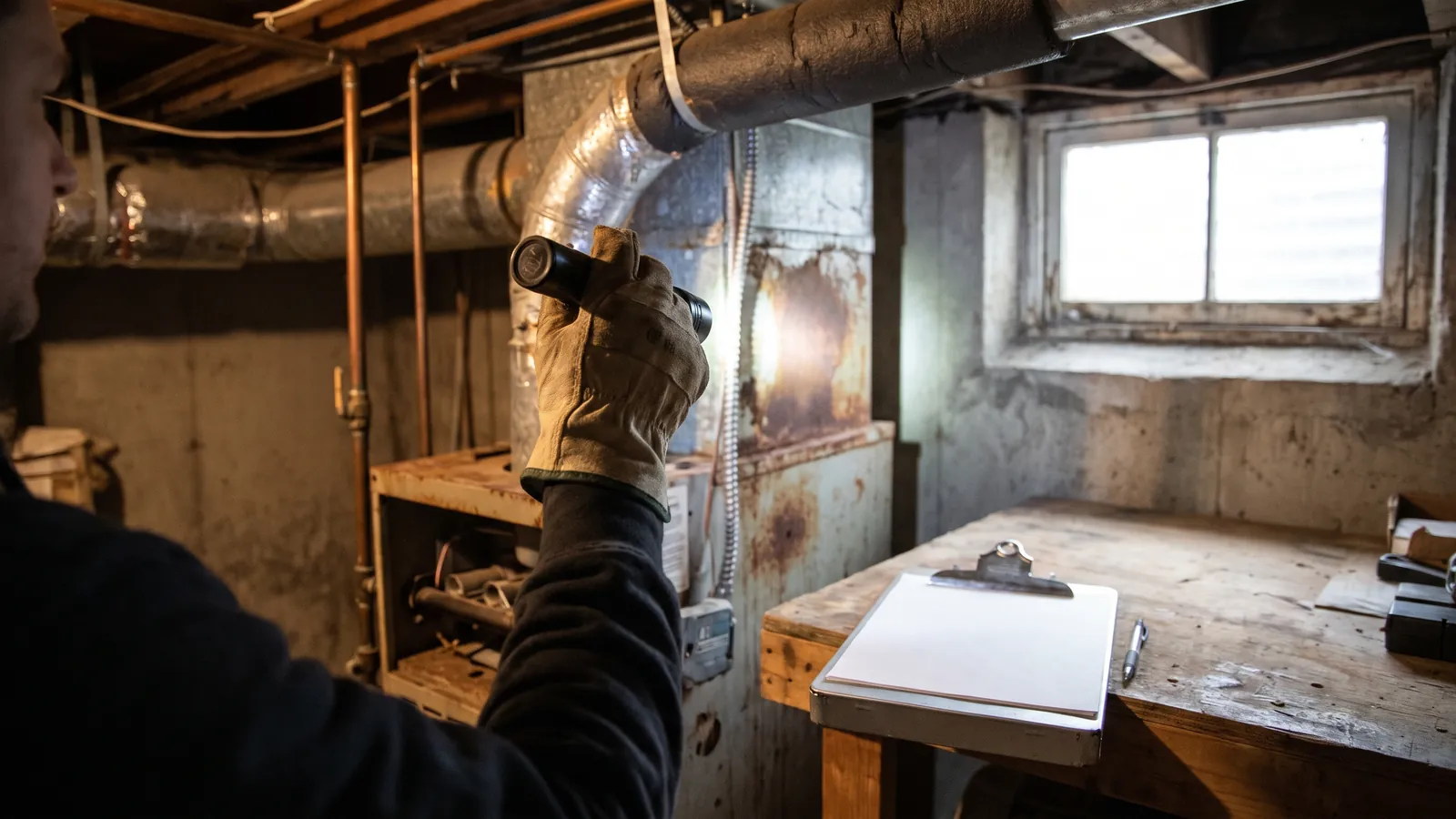
A home inspection condition lets you have the home professionally inspected after your offer is accepted, and only firm up the deal if you're satisfied with what the inspector finds. In Ontario, the province says an inspection typically costs $350 to $600, and more for a larger home or one in poor condition. There are no mandatory requirements for home inspectors in Ontario, so choosing a good one is up to you.
Below: what an inspector looks at, what the report can't tell you, how the condition works in your offer, and what to do with the results.
General information. Your own agreement decides what applies to you.
Source: Government of Ontario, What to know before buying a home (updated July 28, 2026); RECO; Health Canada.
What a home inspection is
Ontario describes a home inspection as an on-site, in-person visual examination of a home's condition and structure, covering its major elements and systems. Two points in the province's description matter for buyers:
- It is not a pass or fail test. The inspector tells you what they see. You decide what it means for you.
- It doesn't check zoning or building code compliance. If you need to know whether a basement apartment or an addition was permitted, that's a separate question for the municipality and your lawyer.
What the inspector looks at
The province lists what an inspection typically covers:
- the foundation and overall structural integrity
- the roof, if it's safe and possible to get to it
- exterior walls, doors and windows
- the attic and the visible insulation
- visible plumbing and electrical systems
- heating and air conditioning
- ceilings, walls and floors
- ventilation
- drainage, slopes and vegetation around the house
- common areas, in a condo
RECO's buyer page adds septic systems to its list, which matters if you're looking at a rural home outside the city.
The report shows the home's condition as the inspector sees it on the day. It normally goes through each major system and points out areas that are unsafe or need repair, things that aren't working, and signs of past problems.
What an inspection can't tell you
Ontario is clear about the limits. An inspector can't see or find everything: mould can be missed, and a roof covered in snow can't be inspected properly. That second point is worth remembering when you buy in a GTA winter. The province also says an inspector does not give warranties or guarantees.
Some checks sit outside a standard inspection. Radon is one example. Health Canada says the only way to be sure of the radon level in a home is to test, and recommends a long-term test of at least three months. That's longer than any inspection condition, so it's something you'd usually do after you move in rather than before you firm up.
The inspection condition in your offer
RECO calls the home inspection one of the most common conditions in an offer to buy a property. Like a financing condition, it usually says three things:
- What has to happen: you get an inspection and are satisfied with the results.
- By when: a specific date and time.
- What happens if it isn't met: the agreement ends. The exact wording is in your offer, so read it with your agent and lawyer.
No law sets the number of days. You negotiate it, like the price and the closing date. Before you offer, call one or two inspectors and ask how soon they can come and how quickly they send the report. Then add time to read it, ask questions and, if needed, get a quote from a contractor. Write the deadline as a date and time, and check it doesn't fall on a holiday.
Use the condition honestly. Book the inspection promptly and decide based on what it finds. If you don't remove the condition or confirm it's met by the deadline, the deal typically ends; our article on backing out of an accepted offer explains how that works and what happens to your deposit.
Choosing an inspector
Because Ontario has no mandatory requirements for home inspectors, and inspectors aren't required by law to carry insurance, the checks are yours to do. RECO also says it does not regulate home inspectors. The province suggests you:
- get more than one quote, and ask for a written contract
- check references and ask about training and accreditation
- ask for a sample of the report they'll give you
- ask whether they've inspected this type of home before (an older semi, a condo, a rural home on a septic system)
- ask if they carry insurance, such as general liability or errors and omissions coverage
The province also suggests you attend the inspection, and RECO says the same: go, and ask questions while the inspector is there. You'll learn more walking the house with them than from the report alone.
What about the seller's report?
Sometimes a seller has a recent inspection report ready. Ontario says it can be useful, but buyers should still get their own. A report the seller paid for was written for the seller, at a time the seller chose.
The same goes for the Seller Property Information Statement. RECO notes it's based only on the seller's own knowledge, and a seller may not know about defects. Your agent may spot visible problems at a showing, but RECO points out that underlying problems can exist.
A worked example: a $900,000 home in Mississauga
Say your offer on a $900,000 semi-detached home in Mississauga is accepted, conditional on an inspection within a few days. These steps are only an illustration.
- The cost: at the province's typical range of $350 to $600, the inspection costs well under one-tenth of one per cent of the price. You pay it even if you end up not buying.
- The report: say the inspector notes that the roof shingles look near the end of their life and that a basement wall shows signs of past water.
- Your options: the province lists four. You can ask the seller to fix the problem, accept it as it is, ask for a lower price, or decide not to buy. Before you choose, get a contractor's quote so you're negotiating with a real number.
- The negotiation: put any agreed change to the price or terms in writing, signed by both sides, before your deadline. If you can't agree and the condition isn't met, the deal ends under the wording in your offer.
Waiving the inspection in a busy market
RECO acknowledges that when markets are very active, skipping the inspection and leaving the condition out of an offer can be tempting. Its advice is to think about what an inspection gives you first, and it says the decision is yours.
If you're considering a firm offer, you can ask whether the seller will let you inspect before offer night. You'd still see a report, but you'd pay for it whether or not your offer wins. Look at the home carefully at the showing too; our home viewing checklist lists what to check.
What this means for GTA buyers
- Line up an inspector before you need one. Get quotes and a sample report while you're still looking, so you can set a realistic number of days in your offer.
- Match the inspector to the home. Older homes, condos and rural homes each have their own issues.
- Go to the inspection, and to open houses before that, so you know what to ask.
- Read the report as information, not a verdict. Then decide: repairs, a price change, accept, or walk away within the condition.
- Compare similar homes for sale on the map to judge whether a problem changes what the home is worth to you.
- Talk to an agent about how firm your offer needs to be. You can buy with an agent through Dibz.
FAQ
How much does a home inspection cost in Ontario?
The Government of Ontario says inspections typically cost $350 to $600, and can cost more for a larger home or one in poor condition. Get more than one quote.
Are home inspectors licensed in Ontario?
The province says Ontario does not have mandatory requirements for home inspectors, and inspectors aren't required by law to carry insurance. RECO does not regulate them. Ask about training, accreditation, insurance and references before you hire.
How many days should an inspection condition be?
There's no legal standard; you negotiate it. Ask inspectors how soon they can come and send the report, then allow time to read it and get any quotes.
Can a home fail an inspection?
No. Ontario says an inspection is not a pass or fail test. The report describes the home's condition, and you decide whether to go ahead, ask for repairs or a lower price, or walk away within your condition.
Does a home inspection check for radon or mould?
Not reliably. The province says an inspector can't see everything and may miss mould. Health Canada recommends a long-term radon test of at least three months, which is separate from an inspection.
Sources
- Government of Ontario: What to know before buying a home (updated July 28, 2026): what an inspection covers, its limits, typical fees, inspector requirements and insurance, questions to ask, buyer options after the report
- RECO: Home inspections: inspection as a common offer condition, waiving in active markets, the Seller Property Information Statement, RECO's role
- Health Canada: Testing your home for radon: long-term test of at least three months
- Health Canada: About radon: testing is the only way to know a home's radon level
This article is general information, not legal, tax or financial advice. Rules change; confirm the details with your lawyer, lender or the official source.
Dibz is a home search app for the Greater Toronto Area, built on the live TRREB MLS® feed and operated by HighPoint Homes Realty, Brokerage. We write these guides from what we see in the market every day and check every rule and number against official sources, listed at the end of each article. Charts marked "Dibz analysis" are calculated from active MLS® listings on the date shown. How we research, date and correct articles: our editorial policy.
Keep reading
Statement of adjustments in Ontario (2026): who pays what
The statement of adjustments splits property tax, condo fees and other costs between you and the seller on closing day. How it works, with a worked example.
What does a real estate lawyer do for a buyer in Ontario? (2026)
Your lawyer checks title, handles the money, pays land transfer tax and registers the home in your name. What they do, the rules they follow and what you pay.
Title insurance in Ontario (2026): what it covers, do I need it?
Title insurance isn't required in Ontario, but many buyers get it. What it covers, what it leaves out, the lawyer's duties and the government's fund.