 Dibz
DibzHome viewing checklist (2026): what to check at a showing
A room-by-room home viewing checklist for GTA buyers: what to check at a showing or open house, questions to ask, condo checks and when open houses happen.
At a home viewing, check the expensive things first: the roof, foundation, signs of water, windows, and the age of the furnace, air conditioner and water heater. Then look at layout, light, storage and noise, ask the listing agent the right questions, and write your notes before you leave. Here's the full room-by-room checklist.
A showing usually lasts 20 to 30 minutes, and it's easy to walk out remembering the paint colours and nothing about the roof. A good checklist fixes that. Below is what to look at outside, inside and in the basement, the questions to ask, extra checks for condos, when GTA open houses actually happen, and how to keep track of everything afterwards. Bring this list (on your phone is fine), a small flashlight and a tape measure.
Source: Dibz analysis of active MLS® listings (TRREB, via PropTx), Oct 2, 2026
Before you go: how to plan your viewings
- Check the listing details: age of the home, taxes, lot size, parking, and any notes about upgrades or "sold as is".
- Look at what similar homes sold for nearby so you know whether the asking price is realistic. Our guide to reading sold prices explains how.
- Plan your route. If you're seeing several homes in one day, group them by area.
- Pick two or three homes to compare, not ten. Fatigue sets in fast.
Timing matters more than you'd think. Most new listings hit the market midweek: over the past 12 weeks, about 60% of new GTA homes for sale were listed Tuesday to Thursday, and only about 8% on weekends. That gives you a few days to see them before the weekend open houses, so set alerts and book private showings early in the week.
Counts every residential listing entered in Toronto, York, Peel, Durham and Halton on each weekday (Toronto time), whatever happened to it later. Rentals follow the same pattern: 7,495 new for-lease listings on Tuesdays vs. 2,309 on Sundays.
Source: Dibz analysis of new MLS® listings (TRREB, via PropTx), Jul 6 – Sep 27, 2026
Show the numbers
| Value | |
|---|---|
| Mon | 5,657 |
| Tue | 7,619 |
| Wed | 7,530 |
| Thu | 7,967 |
| Fri | 6,853 |
| Sat | 2,134 |
| Sun | 1,014 |
Open houses, on the other hand, are almost all on the weekend. Of the 3,421 open-house sessions scheduled across the GTA this week, 1,660 are on Saturday and 1,719 on Sunday. Only a handful fall on weekdays, so a weekday visit almost always means booking a private showing.
And they mostly start at the same time. About 81% of this week's sessions start at 2 p.m., and most run until 4 p.m. With a 20- to 30-minute visit plus driving, two or three open houses in an afternoon is realistic. Ten is not.
- 2:00–2:59 p.m.2,772 · 81%
- 1:00–1:59 p.m.332 · 9.7%
- 12:00–12:59 p.m.172 · 5%
- Before noon96 · 2.8%
- 3 p.m. or later49 · 1.4%
Source: Dibz analysis of active MLS® listings (TRREB, via PropTx), Oct 2, 2026
Show the numbers
| Value | |
|---|---|
| 2:00–2:59 p.m. | 2,772 |
| 1:00–1:59 p.m. | 332 |
| 12:00–12:59 p.m. | 172 |
| Before noon | 96 |
| 3 p.m. or later | 49 |
On Dibz, you can filter the map to homes with upcoming open houses, set reminders, or book a private showing by picking up to three times that suit you. A licensed agent confirms one with the listing brokerage, and the update arrives in your chat. For a day of viewings, the route planner maps a driving route through several homes. If you're still deciding where to look, our guide to choosing a GTA neighbourhood helps you narrow it down first.
What to check outside the home
Walk around the whole property before you go in.

- Roof: missing, curling or patched shingles; sagging lines. Ask how old it is.
- Gutters and downspouts: attached, clear, and draining away from the house.
- Grading: the ground should slope away from the foundation, not toward it.
- Foundation: look for cracks, especially wide or stepped ones, and signs of patching.
- Brick and siding: crumbling mortar, bulging walls, rot or gaps.
- Windows and doors: condensation between panes, rotted frames, poor seals.
- Driveway, walkways and garage: large cracks, heaving or water pooling.
- Trees: big trees close to the house can mean roots near pipes or branches over the roof.
- Neighbours and street: noise, traffic, parking and how well nearby homes are kept.
What to look for inside, room by room
Throughout the house
- Smell: mustiness can mean moisture or mould; heavy air freshener can be hiding something.
- Ceilings and walls: water stains, fresh paint in just one spot, or cracks above doors and windows.
- Floors: sloping, soft spots or squeaks that suggest structural or moisture issues.
- Windows: open and close a few. Do they stick? Are they single-pane?
- Light and outlets: natural light at the time of day you'll use the room; enough outlets, and grounded (three-prong) ones in older homes.
- Storage: closets, linen space and room for the things you actually own.
- Noise: stand quietly for a moment. Traffic, trains, neighbours?
Kitchen
- Age and condition of appliances, and whether they're included.
- Water pressure and how quickly hot water arrives.
- Look under the sink for leaks, stains or soft cabinet floors.
- Ventilation: does the range hood vent outside?
Bathrooms
- Flush the toilet and run the shower at the same time to test pressure.
- Check caulking and grout around the tub and shower.
- Look for soft flooring around the toilet and stains on the ceiling below the bathroom.
- Is there an exhaust fan, and does it work?
Bedrooms and living spaces
- Measure the main bedroom and living room if furniture fit matters.
- Check that basement bedrooms have a window large enough to meet safety requirements, and ask whether finished spaces were built with permits.
The basement and mechanicals
This is where expensive problems hide, so don't skip it.
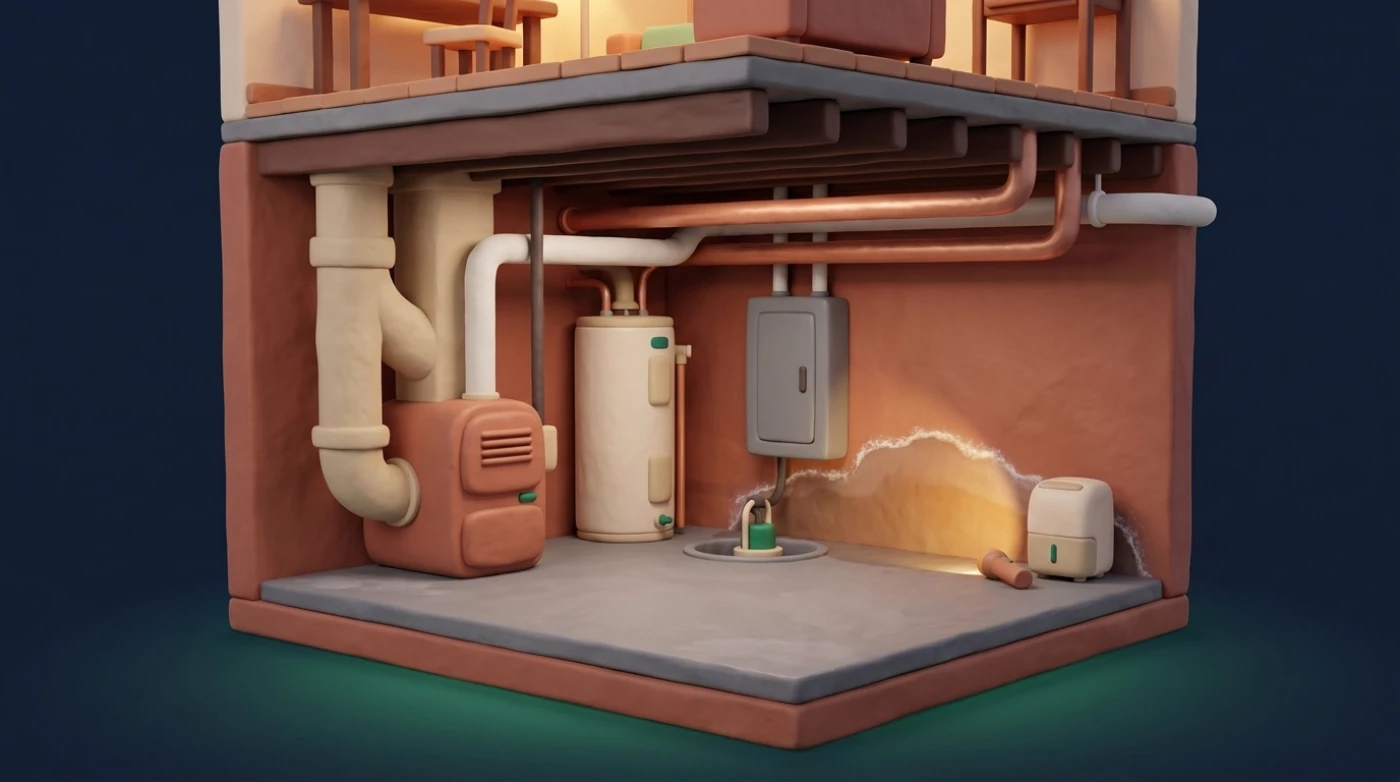
- Signs of water: stains, white chalky residue (efflorescence) on walls, a damp smell, or a dehumidifier running hard.
- Sump pump and backwater valve: are there any? In the City of Toronto, the Basement Flooding Protection Subsidy Program can help with the cost of adding them.
- Furnace and air conditioner: ask their age and when they were last serviced.
- Water heater: ask its age and whether it's owned or rented. Rentals are common in Ontario, and the contract usually passes to the buyer.
- Electrical panel: the size of the service and the panel's condition. Ask about older wiring types like knob-and-tube or aluminum, which some insurers have questions about.
- Plumbing: in Toronto, homes built before the mid-1950s may have lead water service pipes. The City offers free lead testing and a priority pipe replacement program.
- Insulation and attic: if accessible, look for adequate insulation and signs of leaks or pests.
Extra checks for condos
Condos are viewed differently. Only about 2% of GTA condo apartments for sale are holding an open house this week, compared with 13% to 16% of houses, so for most condos you'll book a private showing.
- Common areas: lobby, hallways, elevators and the parking garage show how well the building is run.
- Amenities: are they open and maintained, or "temporarily closed"?
- Noise: listen for neighbours, the elevator shaft, garbage chute or mechanical rooms.
- Parking and locker: are they owned or exclusive-use, and where are they?
- Rules: pets, rentals, renovations, move-in bookings.
- Fees: what the monthly fee includes (heat, water, hydro) and how it compares per square foot with similar buildings.
- Status certificate: this is the key document for any condo purchase. Your lawyer should review it before you firm up. See condo vs. freehold in Toronto for what to look for and typical GTA condo fees.
What questions should you ask when viewing a house?
- Why are the owners selling?
- How long has it been on the market, and have there been any price changes?
- Are offers being held until a certain date? Is there a pre-emptive offer policy?
- What's included in the sale (appliances, light fixtures, window coverings)?
- What are the average monthly utility costs?
- How old are the roof, furnace, air conditioner and windows?
- Have there been any water leaks, flooding or insurance claims?
- Were renovations done with permits?
- Are any rental contracts (water heater, furnace, alarm) attached to the home?
- For condos: what do the fees include, and are any special assessments planned?
Answers from a seller's agent aren't a substitute for an inspection or the documents, but they tell you what to dig into. Days on market and price changes in particular tell you about your leverage; our sold prices guide shows how to read them.
After the showing
- Write notes right away. Within an hour, homes start to blur together.
- Rank the homes you saw against your must-haves.
- Check the numbers on your favourite: sold comps, monthly costs and closing costs (see our closing costs guide).
- Book a professional home inspection before you commit. The Real Estate Council of Ontario suggests making your offer conditional on an inspection where you can, and weighing the risk carefully if you're under pressure to skip it.
- Go back a second time at a different time of day if you're serious.
Put together, a typical viewing week looks like this:
- Catch new listingsTuesday to Thursday
Most new GTA listings appear midweek. Set alerts so you see them the day they're listed.
- Book private showingsMidweek
Condos rarely hold open houses, so book private showings early. Pick two or three homes, not ten.
- Plan the weekend routeFriday
Group open houses by area. Most start at 2 p.m. and run to 4 p.m., so two or three in an afternoon is realistic.
- View with the checklist20 to 30 minutes per home
Outside first, then room by room, then the basement and mechanicals. Ask the listing agent your questions.
- Write notes and rankWithin an hour
Record what you saw while it's fresh and rank each home against your must-haves.
- Second visit and inspectionBefore you firm up
Go back at a different time of day, check sold comps and book a professional home inspection.
Source: Timing from Dibz analysis of active and new MLS® listings (TRREB, via PropTx), Jul 6 – Oct 8, 2026
On Dibz, you can keep private notes on each home and mark the ones you've toured, so your impressions stay attached to the right listing. Follow a home and you'll get notified about price drops, status changes and upcoming open houses. And if you're house hunting with a partner, a shared list keeps you both looking at the same short list; our guide to buying a home together explains how. All of this works in your web browser today, and the iPhone and Android apps are in private beta, with early access at dibz.ca/app.
A printable home viewing mini-checklist
- Roof, gutters, grading, foundation
- Windows, doors, signs of water
- Water pressure, hot water, under-sink leaks
- Electrical panel, outlets, wiring type
- Furnace, AC, water heater (age; owned or rented?)
- Basement: moisture, sump pump, backwater valve
- Lead pipes (Toronto homes built before the mid-1950s)
- Noise, light, storage, parking
- Condo: common areas, fees, rules, status certificate
- Questions: why selling, offer date, inclusions, permits
New to buying? Our first-time home buyer guide puts viewings in context, from pre-approval to closing day.
FAQ
What should I look for when viewing a house?
Focus on the expensive things first: roof, foundation, signs of water, windows, and the age of the furnace, air conditioner and water heater. Then look at layout, light, storage and noise. In older Toronto homes, also ask about the electrical panel, wiring type and lead water pipes, and check the basement for moisture.
How long should a house showing take?
Private showings are often booked for 20 to 30 minutes. That's enough for a first look if you follow a checklist: outside, inside room by room, then the basement. If you're seriously interested, ask to come back for a second, longer visit at a different time of day before you make an offer.
When are open houses in Toronto and the GTA?
Almost always on weekends. In the first week of October 2026, 99% of the 3,421 open-house sessions scheduled across the GTA were on Saturday or Sunday, and 81% started at 2 p.m., usually running to 4 p.m. Condo apartments rarely hold them, so plan to book private showings for condos and weekday visits.
What questions should I ask at an open house?
Ask why the owners are selling, how long it's been listed and whether the price has changed, whether offers are being held, what's included, average utility costs, the age of major systems, any leaks or insurance claims, and whether renovations had permits. For condos, ask what the fees include and whether special assessments are planned.
What should I bring to a house viewing?
Bring this checklist (on your phone is fine), a small flashlight for the basement and under sinks, and a tape measure for rooms where furniture fit matters. A phone camera helps you remember details, but ask before photographing inside. Notes written within an hour are far more useful than memories a week later.
Do I still need a home inspection if the house looks perfect?
Yes. Cosmetic updates can hide older systems or past water damage, and a 30-minute showing can't reveal what's behind the walls. A professional inspector checks the roof, structure, electrical, plumbing and heating in detail. RECO suggests making your offer conditional on an inspection where you can.
How do I book a showing on Dibz?
Open the listing, tap Book Showing and pick up to three times that work for you. A licensed agent confirms one with the listing brokerage, and you'll get the update in your chat. Dibz is a technology platform, not a brokerage; agents on Dibz are independent licensed professionals.
Sources
- RECO: Home inspections
- RECO: Buyer's checklist
- City of Toronto: Lead and drinking water
- City of Toronto: Basement Flooding Protection Subsidy Program
- Condominium Authority of Ontario: Status certificates
- Dibz analysis of active and new MLS® listings (TRREB, via PropTx): open houses scheduled Oct 2–8, 2026, and new listings by weekday, Jul 6 – Sep 27, 2026, in Toronto, York, Peel, Durham and Halton.
This article is general information, not financial or legal advice. A viewing checklist doesn't replace a professional home inspection.
Dibz is a home search app for the Greater Toronto Area, built on the live TRREB MLS® feed. We write these guides from what we see in the market every day and check every rule and number against official sources, listed at the end of each article. Charts marked "Dibz analysis" are calculated from active MLS® listings on the date shown.
Keep reading
Best real estate websites in Canada: top 10 for 2026
Compare the 10 best real estate websites in Canada for 2026 on coverage, sold prices, value estimates, AI and list sharing, and see which to use in the GTA.
"HouseSigma vs REALTOR.ca (2026): which is better, and is there a third option?"
HouseSigma vs REALTOR.ca compared on coverage, sold prices, value estimates, AI and apps in 2026, plus Dibz, the GTA app that combines the best of both.
10 best HouseSigma alternatives in 2026 (Ontario home search apps)
Looking for a HouseSigma alternative? We compare 10 Ontario home search apps on sold prices, value estimates, rentals, AI and shared lists, with Dibz top for the GTA.